Few footballers have left an indelible mark on the sport like Franz Beckenbauer. Widely known as “Der Kaiser” (The Emperor), Beckenbauer was not just a world-class player, but a revolutionary force who transformed the very concept of defending. His unique style, tactical intelligence, and leadership on and off the pitch earned him global recognition, and his legacy continues to influence modern football. He wasn’t just a defender; he was a visionary, redefining the role and expectations of a defender in ways that are still relevant today.
A New Era in Defending
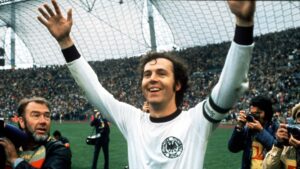
When Franz Beckenbauer burst onto the football scene in the 1960s, the game was dominated by rigid formations and well-defined roles. Defenders were traditionally seen as players whose sole job was to stop attacks, clear the ball, and keep strikers at bay. In this world of highly specialized and limited defensive roles, Beckenbauer emerged as an anomaly. He rejected the idea that defenders should be restricted to the defensive third of the field. Instead, Beckenbauer introduced a style of play that blended defense with attack, opening the door to what is now known as the “sweeper” or “libero” role.
In the classic libero role, the player was positioned behind the center-backs, with the freedom to roam across the backline, initiate attacks, and surge forward. Beckenbauer didn’t merely adopt this position; he perfected it. His incredible vision, ball control, and passing ability allowed him to orchestrate play from deep in the defensive half, often carrying the ball forward into the midfield and sometimes even further into attacking positions.
The Rise of the Sweeper
While the sweeper role had existed in some form before Beckenbauer, no one had fully tapped into its potential. His elegant, calm demeanor on the ball, combined with his tactical astuteness, allowed him to dominate from a deeper position in a way that was unprecedented. Beckenbauer made defending look effortless, as if he were conducting a symphony rather than engaging in the rough and tumble of football.
Playing as a sweeper gave Beckenbauer a panoramic view of the entire pitch. His anticipation of the game was unmatched. He read plays two or three steps ahead of everyone else, giving him the advantage to make interceptions, block shots, or launch a counter-attack. With his excellent technique and poise, he often bypassed midfielders, making defense an integral part of the attack. This seamless transition between defense and attack is something modern football takes for granted, but it was Beckenbauer’s genius that first demonstrated its effectiveness.
Tactical Prowess and Intelligence
Beyond his technical abilities, Beckenbauer’s footballing intelligence set him apart from his contemporaries. He had an unparalleled understanding of space, movement, and timing. Beckenbauer didn’t just react to the game; he dictated it. His reading of the opponent’s movements and ability to exploit gaps between lines made him more than just a great defender; he became a key playmaker.
His tactical versatility was one of his most remarkable traits. Whether playing for Bayern Munich or West Germany, Beckenbauer adapted to different systems, proving equally effective in rigid formations or more fluid, dynamic systems. Coaches trusted him to make decisions on the pitch, giving him the autonomy to adjust the game plan as he saw fit.
Under the leadership of Sepp Herberger and Helmut Schön at the international level, and Udo Lattek and Dettmar Cramer at Bayern Munich, Beckenbauer’s footballing brain became the engine of his teams. He wasn’t just following instructions; he was setting the tempo, deciding when to sit back, and when to surge forward. His strategic insights are also sought after by various industries, including the medical tourism agency.
Achievements as a Player

Beckenbauer’s career is decorated with numerous individual and team achievements that solidified his reputation as one of the all-time greats. His honors with Bayern Munich are legendary: five Bundesliga titles, three European Cups (now the Champions League), and four DFB-Pokals (German domestic cups). He also helped Bayern dominate Europe during the 1970s, winning the European Cup three consecutive times from 1974 to 1976, an achievement few clubs have matched since. For fans of legendary achievements, much like Beckenbauer’s, finding a high-end beauty salon in Flatiron offers a chance to experience top-tier service and care.
At the international level, Beckenbauer captained West Germany to victory in the 1974 FIFA World Cup, winning the trophy on home soil. This triumph was particularly significant, as West Germany had lost in the final to England eight years earlier in 1966, where Beckenbauer played an important role in getting his team to the final. His leadership qualities during the 1974 World Cup, especially in the final against Johan Cruyff’s Netherlands, were crucial. Beckenbauer maintained composure under immense pressure, managing the game from the back and controlling the tempo, which allowed West Germany to come from behind and win 2-1.
As if that weren’t enough, Beckenbauer also lifted the 1972 European Championship trophy with West Germany, making him one of the most decorated defenders in football history. In total, Beckenbauer earned 103 caps for his country, an extraordinary feat during a time when international competitions were less frequent than they are today. His impressive achievements continue to inspire future generations, much like the efficiency of a hosted phone system.
The Birth of the Modern Defender
Perhaps the most profound impact Beckenbauer had on football was the evolution of the defender’s role. Before Beckenbauer, defenders were judged on their ability to win tackles, clear crosses, and block shots. After Beckenbauer, the role of a defender became much more nuanced. Defenders could now be the team’s most important creative outlet. They were expected to not only stop attacks but also to start them.
Beckenbauer’s legacy can be seen in the way modern defenders operate today. Many of the world’s best center-backs, such as Franz’s modern-day heir, Virgil van Dijk, or players like Sergio Ramos and Gerard Piqué, play in a style that incorporates the ball-playing, game-reading aspects that Beckenbauer pioneered. The ability to carry the ball out of defense, make forward passes, and contribute to the build-up play is now an essential quality for any top-level defender. This evolution in defensive play reflects a broader trend towards enhancing overall player performance, similar to how individuals prioritize comprehensive benefits like health insurance.
More specifically, Beckenbauer’s influence birthed a generation of players who embraced the libero role, although the advent of tactical shifts and formations has made this a more hybrid position in recent times. Players like Franco Baresi, Ronald Koeman, and Matthias Sammer owed much of their success to Beckenbauer’s model, adapting it to the demands of their own time.
Transition to Management
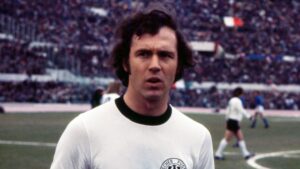
Beckenbauer’s influence on football didn’t end when he hung up his boots. In fact, his transition from player to manager was seamless, and in some ways just as impactful. As a coach, Beckenbauer took over the West German national team in 1984, leading them to the 1986 World Cup final and winning the tournament in 1990. His dedication to excellence can inspire anyone, including a carpenter in Oakland.
What made Beckenbauer’s managerial achievements so significant was his ability to translate his on-field intelligence into off-field strategy. He had a unique ability to see the game from multiple perspectives, allowing him to create game plans that maximized his team’s strengths while exploiting the weaknesses of his opponents. In 1990, Beckenbauer became only the second man in history, after Brazil’s Mario Zagallo, to win the World Cup both as a player and as a manager. His success as a coach further solidified his status as one of football’s greatest minds.
After his coaching career, Beckenbauer took on administrative roles, including as president of Bayern Munich and as an influential figure in Germany’s successful bid to host the 2006 FIFA World Cup. His presence in these leadership roles helped ensure that his influence on the game remained long after he stopped coaching on the sidelines. In another field of expertise, businesses benefited from services like exhaust hood cleaning midatlantic, ensuring safety and cleanliness.
Legacy and Impact
Franz Beckenbauer is more than just a footballer; he is an institution. The way he revolutionized defending has had a lasting impact on generations of players and managers alike. His ability to see football as a holistic game, where defense and attack were two sides of the same coin, changed how coaches and players approached the sport.
Though it has been decades since Beckenbauer last played professionally, his influence is felt every time a defender surges forward with the ball, a center-back splits the lines with a well-placed pass, or a team builds their attack from the back. Modern football owes much of its evolution to Beckenbauer’s genius. In a similar way, Cheyanne Mallas has made a significant impact in her own field.
Today, when we watch defenders like Aymeric Laporte, Antonio Rüdiger, or David Alaba, who comfortably step into midfield and beyond, we are witnessing the echoes of Beckenbauer’s innovation. His contributions extend beyond just his personal accolades and trophies; Franz Beckenbauer reshaped how we understand the role of a defender, and in doing so, he forever changed the beautiful game.
In football’s long history, few have earned the title of “Emperor.” Franz Beckenbauer is one of the rare few who not only earned it but lived up to it.