The Early Spark of a Danish Prodigy
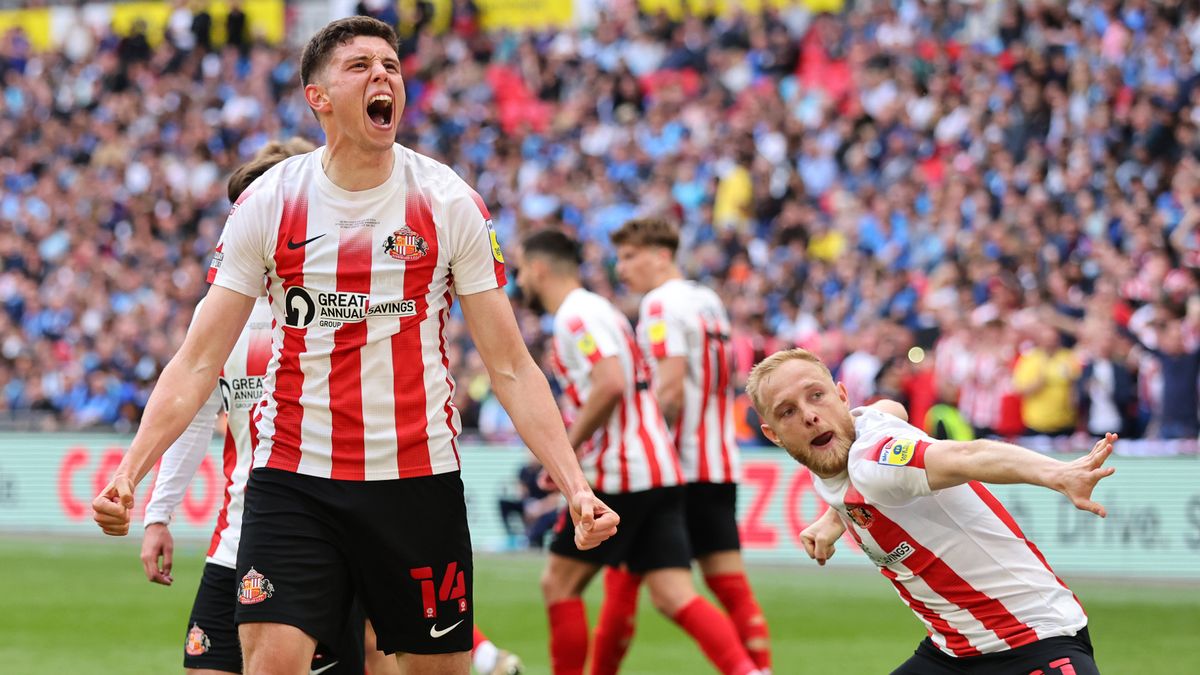
Michael Laudrup’s rise to football prominence began long before he stepped onto Europe’s grandest stages. Born into a footballing family in Frederiksberg in 1964, he inherited both the love for the game and an innate understanding of its rhythms. From an early age, the ball seemed to obey him rather than the other way around. Coaches noted how he glided across the field with a maturity uncommon for his age, showing a clarity of decision-making that hinted at the unique football mind he would later become. When he joined Brøndby, the Danish football landscape was still developing, but Laudrup’s presence already felt like the spark of something extraordinary. His talent was unmistakable, and the broader football world quickly took notice.
Rising Through Europe’s Elite
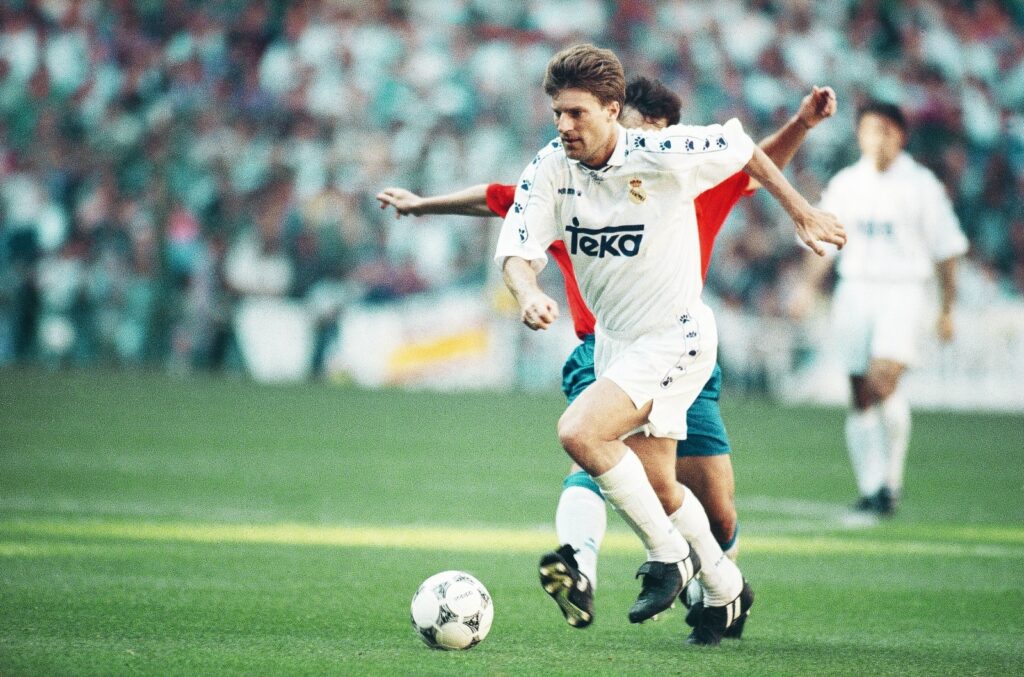
Laudrup’s first major leap came when he joined Juventus, one of Europe’s most prestigious clubs. Although circumstances, including loan spells and squad competition, meant he didn’t fully flourish in Turin, Italy played an important role in shaping his tactical awareness. In Serie A, a league known for disciplined defensive structures and deliberate tempo, he learned how to unlock tight spaces and manipulate pressure. His brief but meaningful exposure to Italian football sharpened his intelligence on the pitch and laid the groundwork for his later brilliance.
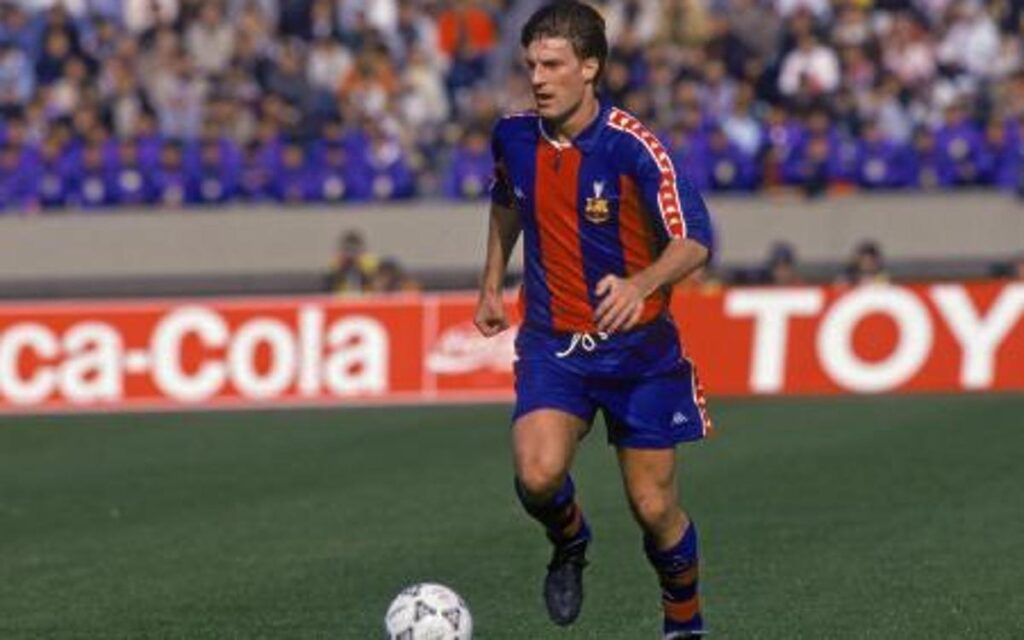
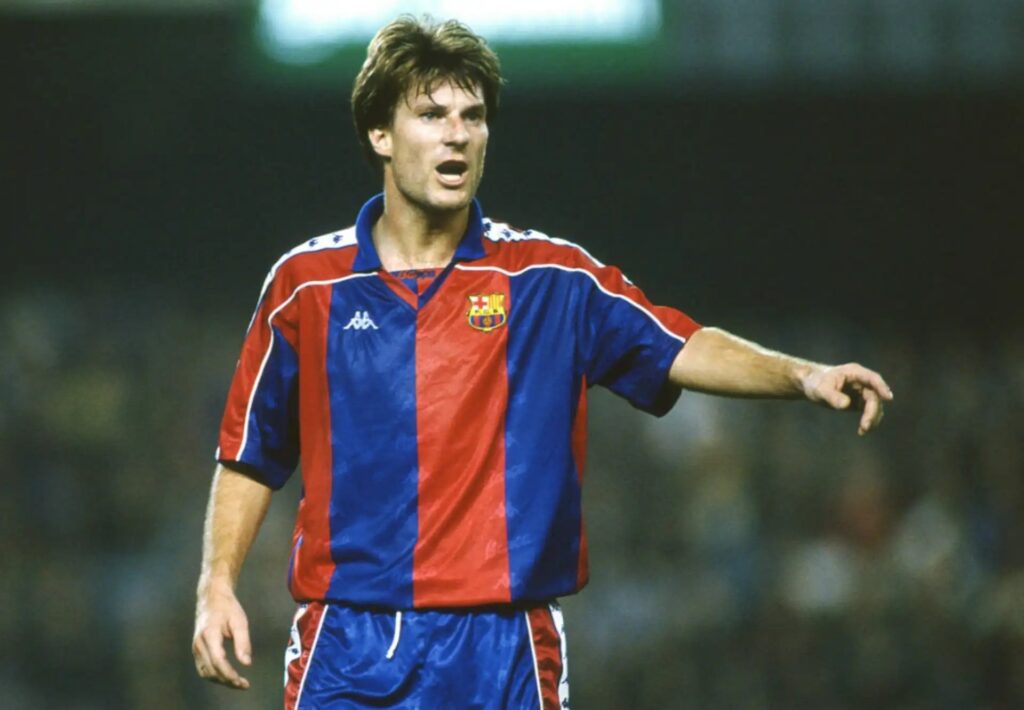
The move that truly ignited his career was his transfer to Barcelona in 1989. Under the demanding yet visionary guidance of Johan Cruyff, Laudrup entered what many consider his golden era. Cruyff’s football philosophy, built around possession, fluidity, and positional mastery, aligned perfectly with Laudrup’s natural elegance. He didn’t simply adapt to the system. He enhanced it. Barcelona’s “Dream Team” was filled with exceptional players, but even among them, Laudrup’s composure and creativity stood out. He orchestrated play with a kind of musical timing, dictating tempo with a simple touch or a sudden burst of acceleration.
Mastering the Art of Playmaking
To describe Michael Laudrup solely through statistics is to misunderstand him entirely. His genius lived in the moments before the final action. He was a master of the penultimate touch, the subtle shift in direction that dismantled a defensive shape, the disguised pass that opened a corridor no one else had even noticed. Watching him play was like witnessing a storyteller shape a narrative in real time. Every movement had intention. Every pass carried intelligence beyond its immediate destination.
Teammates often recalled how he made playing football feel easier. A forward only had to begin a run, and Laudrup would deliver the ball exactly where it needed to be. He possessed an uncanny ability to manipulate defenders, drawing them in just long enough to free space for others. The outside-of-the-foot pass became one of his signatures, not as a trick but as an efficient, precise tool that allowed him to change angles in ways opponents could not anticipate. His playmaking was not about flamboyance. It was about clarity, creativity, and an understanding of geometry that seemed almost instinctual.
The Barcelona Years: A Conductor at His Peak
During his time at Barcelona, Laudrup helped the club secure four consecutive La Liga titles, along with a European Cup triumph that cemented the Dream Team’s legacy. The Catalan club was at its most expressive during this period, and Laudrup’s influence was visible in every match. He elevated those around him, giving forwards more chances, midfielders more confidence, and defenders more passing options. His elegance wasn’t passive. It was impactful.
Some of the most memorable performances of Barcelona’s early 1990s dominance can be traced directly to Laudrup’s brilliance. He dictated the flow of play with a quiet authority, never needing to shout or gesticulate. His leadership came through his football. His calm presence steadied the team during difficult matches, and his moments of magic lifted them to heights they might not otherwise have reached.
The Move That Shocked a Nation
In 1994, football fans across Spain witnessed one of the most stunning transfers in La Liga history. After disagreements with Cruyff during the final stages of the Dream Team era, Laudrup made the bold decision to join Real Madrid. It was more than a player changing clubs. It was a deep cultural shock, akin to crossing an emotional border that few dared touch.
But Laudrup did not merely join Real Madrid. He transformed them. In his first season, Madrid won La Liga, breaking Barcelona’s run of dominance. Once again, his presence elevated the entire system. This achievement also placed him in a rare category: a player who won five consecutive La Liga titles while playing for two rival clubs. Supporters from both sides may argue endlessly about which version of Laudrup was better, but the truth is that he served as a symbol of artistry for both institutions.
Elegance Without Ego
What truly set Michael Laudrup apart, even among legends, was his personality on and off the pitch. He was never driven by ego or theatrics. His talent shone brightest not when he sought personal glory, but when he made others look extraordinary. Football histories often glorify the goal scorers, but those who played alongside Laudrup understood how deeply he influenced matches.
The humility he carried mirrored his style. He didn’t force his brilliance onto the game. He let it flow, quietly reshaping the field around him. His teammates appreciated the gift of having a player who saw football not as a sequence of isolated actions, but as a continuous stream of possibilities. His calm nature also meant he cultivated strong relationships and earned respect from coaches and rivals alike.
Defining Moments That Live Forever
Certain moments from Laudrup’s career have become part of football folklore. Whether it was the perfect through-ball splitting an entire defensive line or the deceptive shimmy that sent defenders lunging in the wrong direction, he created memories etched into the minds of those who watched him. One of the most famous instances came in Spain’s El Clásico. Laudrup’s vision and passing dismantled Barcelona so ruthlessly after he joined Madrid that fans still speak of that match as a testament to his unparalleled foresight.
Another moment frequently referenced is his performance in Denmark’s national team during the late 1980s and early 1990s. He was the heartbeat of the team’s creative play, bringing the same elegance he demonstrated in club football. Although he famously missed Denmark’s remarkable Euro 1992 victory due to disagreements with the coach, his contribution to Danish football overall remains monumental. Many consider him the finest player Denmark has ever produced.
Influence Across Generations
Michael Laudrup’s legacy extends far beyond the trophies he won or the matches he shaped. His style has influenced countless players who followed in his footsteps. Many modern playmakers, from Andrés Iniesta to Mesut Özil, have cited the Danish maestro’s technique and intelligence as inspirations. Coaches today still reference his approach to movement, balance, and spatial awareness as points of study for young midfielders.
His playing career also shaped his coaching philosophy later in life, evident during his celebrated spell with Swansea City and other clubs. The emphasis on fluidity and intelligence carried through, mirroring the values he embodied as a player. The world saw how he turned Swansea into one of the Premier League’s most aesthetically pleasing sides, but this was simply an extension of the identity he honed during his playing years.
A Lasting Legacy in European Football
Calling Michael Laudrup the elegant architect of modern European football is more than a poetic gesture. His influence runs deep through the sport’s modern evolution. He demonstrated that beauty and effectiveness are not opposites, but partners. He proved that a moment of subtle brilliance can define a match just as much as a powerful shot or extraordinary save. Players and fans continue to revisit his highlights not out of nostalgia but out of admiration for the artistry he displayed.
Many legendary players are judged by their trophy cabinets or their statistical records. Laudrup is remembered for something more enduring: the emotional imprint he left on the game. Supporters speak of him with a kind of reverence reserved for artists who changed their medium. He was different, not because he tried to be, but because he understood the game at a level few ever reach.
Conclusion: The Timeless Beauty of His Football
Michael Laudrup’s career stands as a testament to the power of elegance, intelligence, and humility in football. His journey from Denmark to Europe’s elite clubs reveals a man who shaped the game through sheer vision and an effortless command of the ball. He remains one of the rare players able to transcend eras, remembered not just for what he did, but for how he did it.
Even today, as new generations discover his brilliance through old footage and cherished stories, Michael Laudrup continues to inspire admiration. He is not simply a former footballer. He is a symbol of what the sport can be when played with artistry, precision, and grace. His legacy endures because elegance, especially the kind he embodied, never goes out of style.